Efforts are under way to fight curly leaf pondweed in Balaton’s beloved lake
Property blight isn’t the only thing plaguing Balaton these days. There has also been growing concern about Lake Yankton, and for good reason.
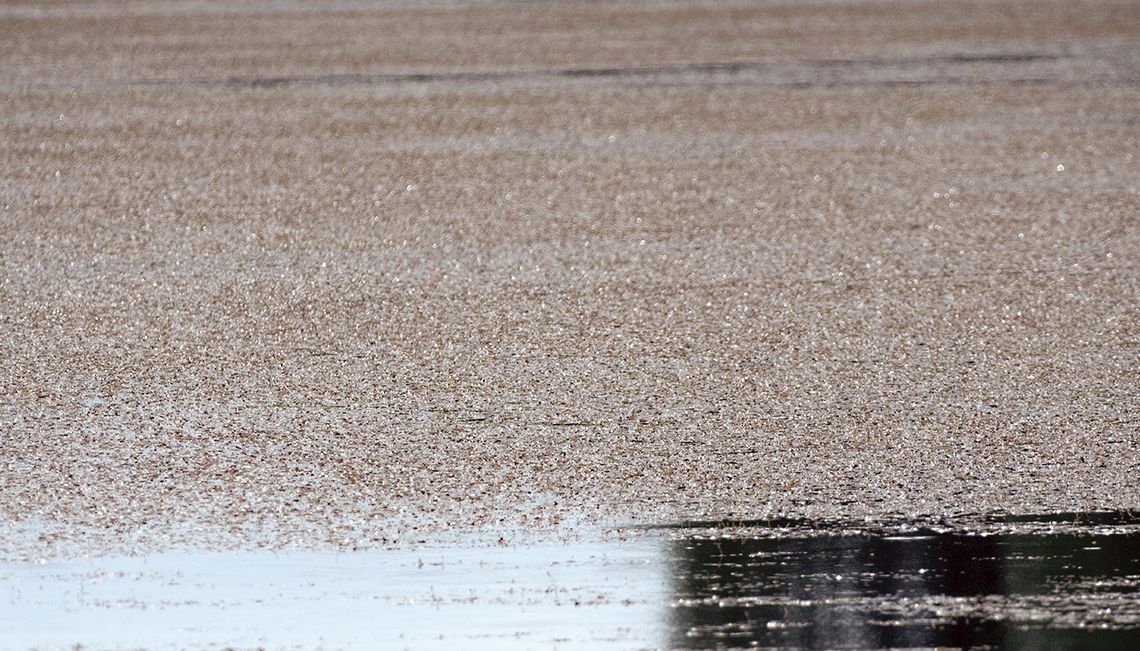
The popular lake, widely considered the heart of the small town, is under siege from blight of its own in the form of curly leaf pondweed, an invasive species that has taken over much of the lake.
The issue was brought to the council at its May 11 meeting, at which time the lake was on the precipice of being added to the State’s Infested Waters list (as of May 13, it hadn’t been officially added to the list).
“It’s quite an asset to the community of Balaton for sure,” Balaton Sportsman’s Club President Jeremy Swenson said. “The Sportsman’s Club has been working on the lake for years, trying to build it back up from the winter kill in 2018. We’ve been stocking it with walleyes, and it’s really exciting to see the natural reproduction. And we’ve put crappies and perch in there. But we need to protect our resources.”
Whether or not Yankton will be officially classified as an infested body of water, the problem exists, and residents have taken notice.
At last month’s meeting, the city council talked about possibly working with Lyon County on future mitigation. The Balaton Sportsman’s Club has taken the lead and has formed a volunteer task force to begin indentifying funding sources, treatment options, costs and logistics. The next step is to gather cost estimates for available treatment options.
If funding comes available, the task force will develop a treatment plan, identify where to begin and coordinate the work needed to move forward; this will likely take place next spring.
There is no quick fix, but curly leaf has been mitigated in many lakes, such as Lake Benton in Lincoln County.
There is still time to apply for a permit to use a mechanical harvester in the area with the heaviest CLP mats in the southwest corner of the lake, to the left of the public boat launch. However, securing the permit and finding an available contractor who will not introduce another aquatic invasive species would be difficult on short notice, so this may not be practical in 2026.
A herbicide treatment next spring is another option. Herbicides are generally considered safe for fish, people and dogs.
“A chemical treatment might be our only option,” Swenson said. “We’re waiting on pricing and what our budget will be.”
Swenson said restoring Yankton could very well be a community effort, as this battle is not something the Sportsman’s Club can afford to fight alone.
“The wonderful thing is, we have very good organizations in Balaton that are very supportive and all seem to come together and work together,” he said.
Lake Yankton is a roughly 400-acre lake with extensive infestations of the invasive plant. The Minnesota DNR Aquatic Invasive Species Specialist inspected the lake this spring and confirmed the problem. As a result, several areas are currently difficult to use for boating, swimming, and fishing because of the dense weed growth.
Curly leaf most likely arrived on boating equipment carrying vegetation from an infested lake. Minnesota law requires boats and trailers to be cleaned before leaving a lake to help prevent the spread of aquatic invasive species, but compliance is not always perfect.
Another possibility is the fish/carp die-off a few years ago, which increased water clarity, allowing more sunlight to reach the lake bottom and promote plant growth. Some sources suggest grass carp can help control curly-leaf pondweed, but that does not appear to be the case with buffalo carp, which are the primary carp species in Yankton.
Curly-leaf pondweed follows an unusual growth cycle. It thrives in cold water and then dies off quickly in mid-summer. As it decays, it can use up large amounts of dissolved oxygen and contribute to fish kills.
When the weed decomposes, it releases phosphorus into the water. That can fuel cyanobacteria and algae blooms, which further reduce oxygen levels. CLP grows aggressively and forms thick surface mats that crowd out beneficial native vegetation, disrupt the food web, and make conditions less suitable for many fish.