Teacher feature
Editor’s note: These are the first in a series of stories that introduce new teachers and staff at Tracy Area Public Schools.
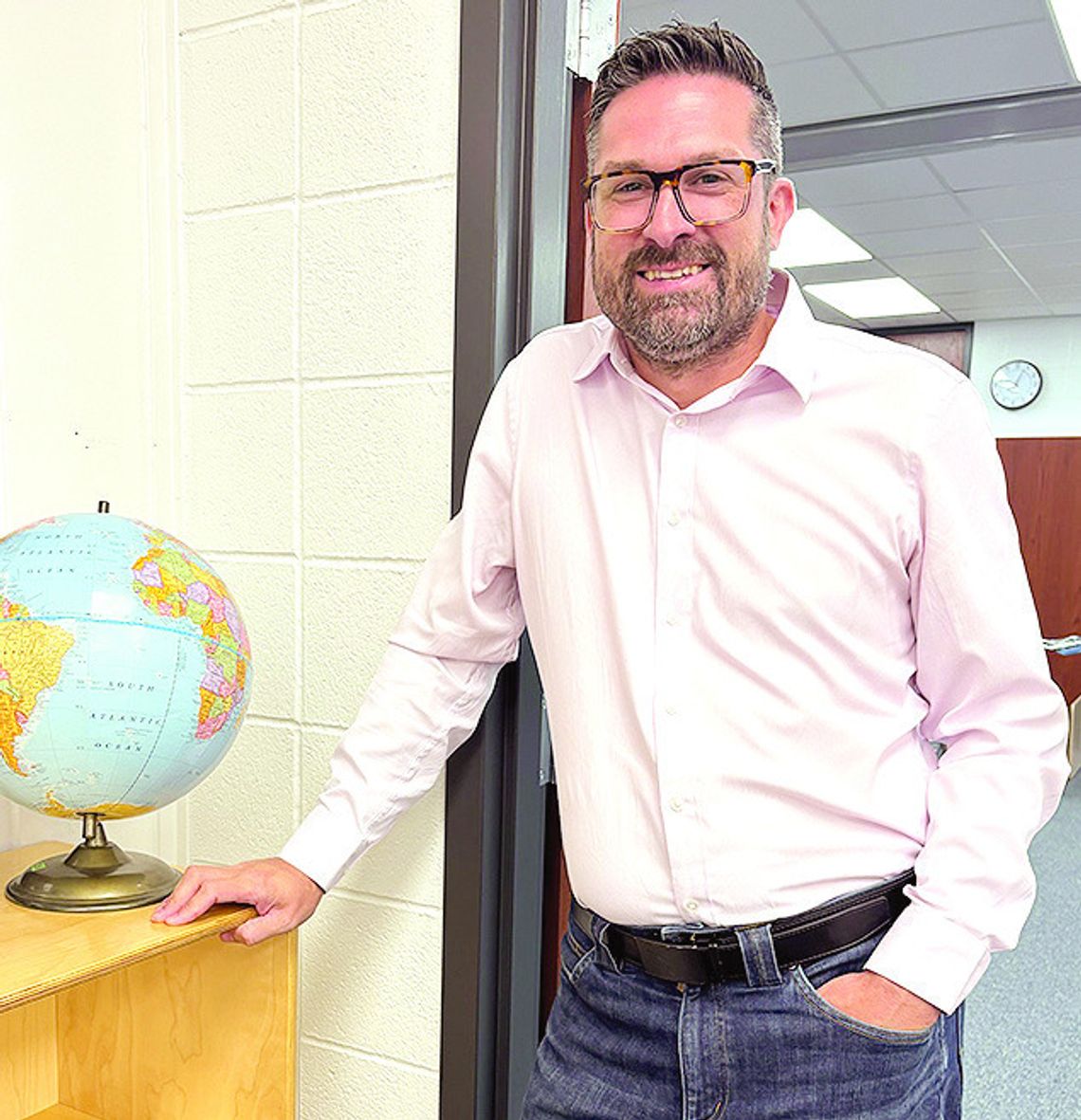
The Socratic circle. You might have to take the Google route to learn what that means, but eighth- and 10th-graders in Burke Gardner’s English class this year will soon definitely know what it is — or at least some version of it.
Gardner, one of a number of new teachers at Tracy Area High School for the 2026-27 school year, is excited to introduce a unique teaching method to students this school year — excited because it is based on student-led group discussion that inspires questions, observation, note-taking and feedback.
CIRCLE
continued on page 3 “It basically presents them with an idea and encourages students to ask questions,” said Gardner. “Through this process of asking questions, you bring out what you actually think, what you believe.”
Burke admits that teaching this style with a room full of 25 students is rather difficult, so he is asking his own version that is more suitable for two dozen students. That, he said, is the fish bowl method.
“You take a bunch of kids … and put them in a circle,” he explained. “They’re the ones who are answering the questions. Everyone else is observing. As they’re going through their discussion, they have their own worksheet to fill out — what are their observations, did they ask good questions. Sometimes you’re the observer, sometimes you’re in the circle.”
Gardner says one of the biggest ways people interact with the English language on a day-to-day basis is by communicating. The fish bowl encourages students to learn how to have discussions, how to debate, how to ask follow-up questions. This way of teaching, he believes, will better prepare teenagers for their post-high school lives.
“The idea is go get students out of their shell,” he said. “I’m planning on introducing it in a very friendly way — we’re not going to dive right into the hardcore questions.”
Ideally, the conversation skill-set Gardner wants to instill in his students will be realized through a game called Table Topics.
“It’s about what are the different ways we can have a conversation on a simple topic,” he said. “Once they get used to that, we start to put more of the meat into it. Through that process, hopefully those kids that are a little more introverted are able to come out of their shell. It doesn’t matter what kind of job you have, you’re going to have to talk to people.”
Gardner’s style is somewhat untraditional, but it’s how he believes he will be able to better reach kids and prepare them for their future.
“When you talk to kids, no matter what subject you teach, the question is, ‘Where am I going to use this in the real world?’” he said. “Hopefully when they ask that question, I can give them practical examples — ‘you will be talking to people.’” Gardner is also big on etymology — the study of word origins — and he plans on bringing that to his classroom as well. Vocabulary is highly stressed through the Minnesota Read Act. Signed into law in 2023, the Read Act has been referred to as an expansive set of funded mandates that direct public schools as to how they train teachers in the science of reading.
“I really like etymology, which is the story of how a word became what it means,” he said. “We’re going to be doing a lot of bell-ringers centered around vocabulary — this is the lesson we’re learning, this is the vocabulary of that lesson.”
In his classroom are both a traditional dictionary and an eytomolgy dictionary — “you can look at the same word and get information about it, which I think is kind of cool,” Gardner said.
Gardner was born in Dickinson, ND, and studied theater at Whitman College in Walla Walla, WA. Gardner and his wife, MyKelle, and daughter, Onora, moved to Tracy May 2025. Before being hired at the high school, he served as a substitute teacher/paraprofessional at Tracy Area Elementary School.