Tested at every turn, Carl Nyquist is proving his strength as a cancer survivor
Carl Nyquist has been tested these last few years more than anyone should be. The strength he shows today was forged in life-altering challenges that include watching his then-four-month-old daughter Thea fight for her life three years ago.
“I left my mom’s funeral to go to Mayo for my daughter’s open heart surgery; we were there for a month,” said Nyquist. “We’re still dealing with what life is like for her.” And if that wasn’t enough, the father of five was diagnosed with Renal Cell Carcinoma in 2024. All of a sudden, the family patriarch whose job it was to hold his family together, realized doing so would be a true challenge.
“It was very hard; (his wife) Soni was dealing with our kid — what do we do here?” Nyquist said. “Then I get sick … it was really hard on our family. It definitely took its toll.”
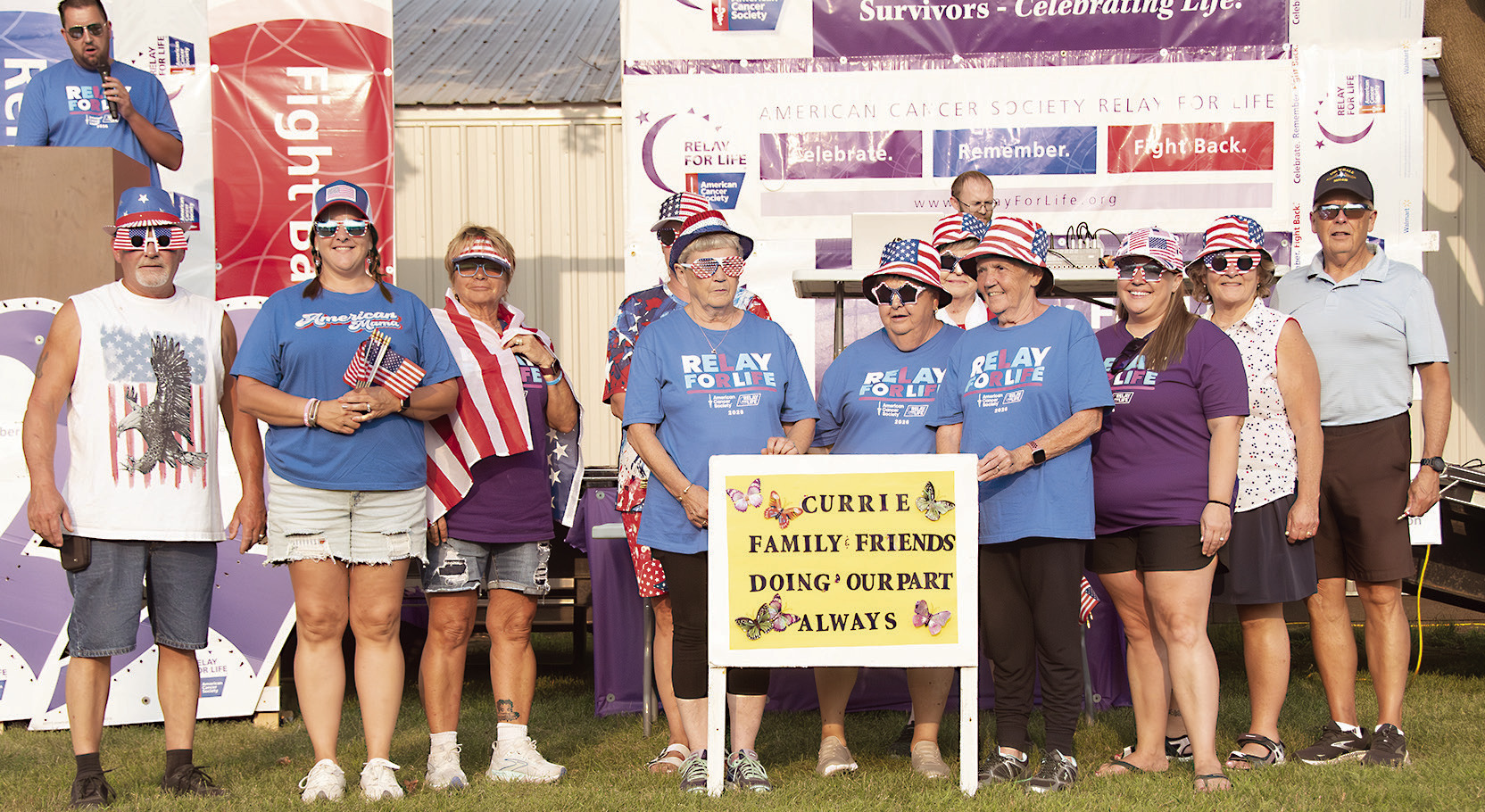
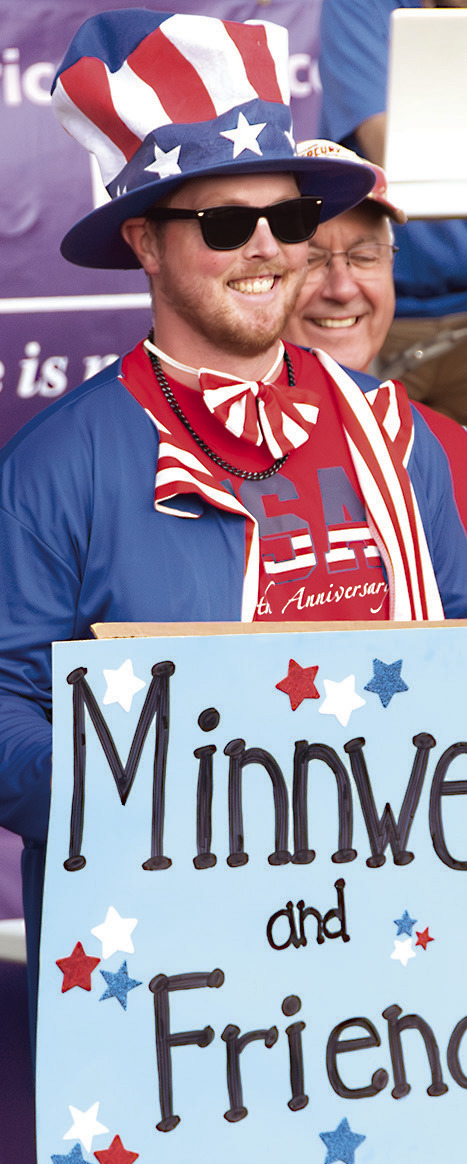
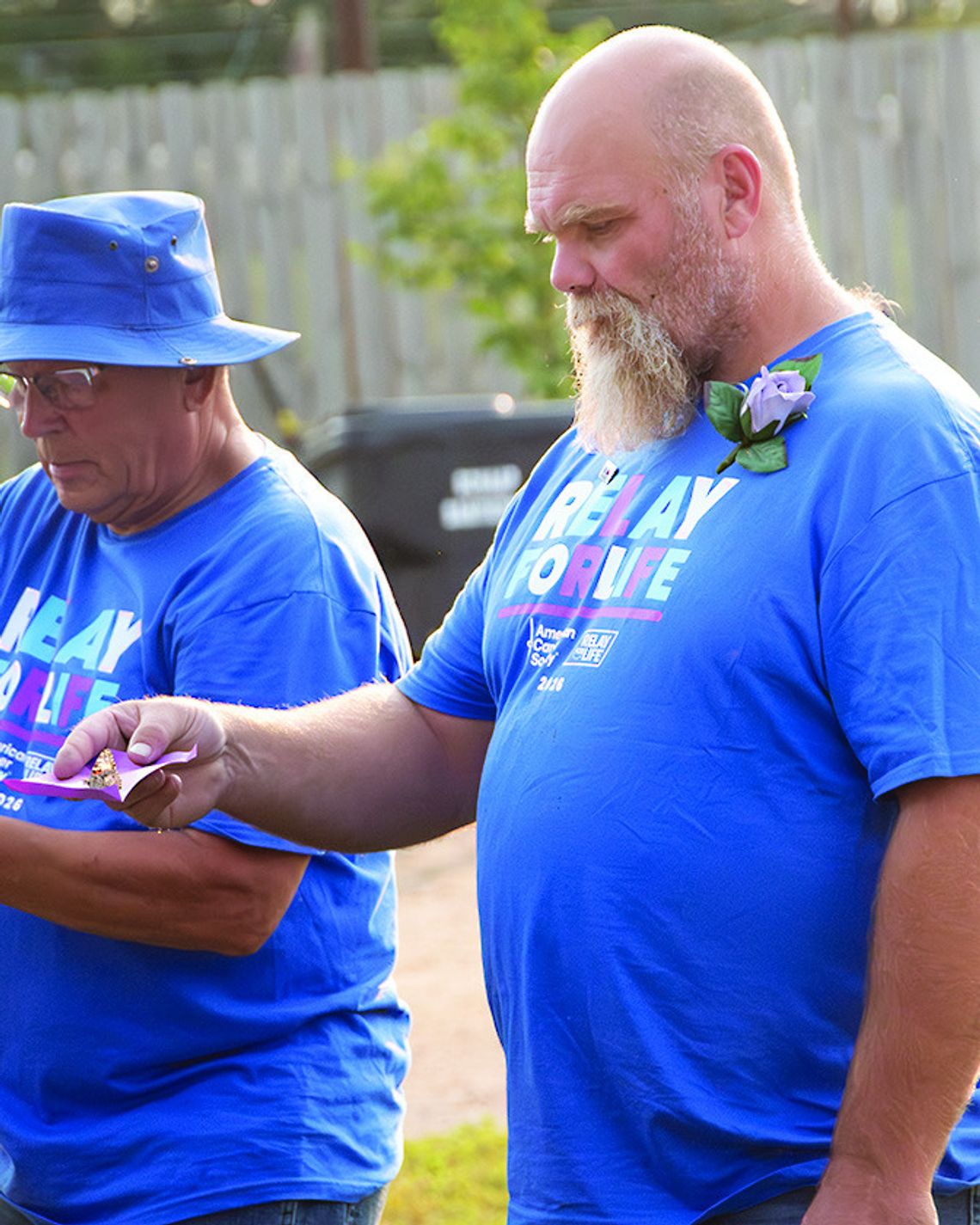
Thea is now 3, and a recent visit to the cardiologist shed a most positive light on her future. Her father’s future is looking bright as well. And on Saturday, Nyquist, along with Kim Maas of Waseca, was the center of attention at Saturday’s Murray County Relay For Life ceremony as 2026 Honorary Survivors.
“This takes me back,” Nyquist said about becoming a member of the fraternity of cancer survivors. “In 2024, I was fighting for my life and trying to figure out what I was supposed to do, and now I have a way to share my story and maybe help somebody else who’s going through the same thing.”
The cancer diagnosis changed Nyquist in myriad ways, and the mental battle, he said, has been almost as difficult as the physical one that all cancer survivors fight.
“You have to overcome what that word cancer means,” he said. “Everyone has their own fears and insecurities. You’re sitting in the doctor’s office hearing you have cancer, it puts your mind in a place where it’s a death sentence.”
Nyquist, the emergency management director for Murray County, at one time questioned how he was going to get through the diagnosis. It didn’t take long for his question to be answered.
“Honestly, it was because of really good friends, great community support, great work support,” he said. “And getting involved with things like (Relay For Life) — giving back. Tracy did a benefit for me — Lonnie at the bowling alley; the support has been just phenomenal.”
Nyquist’s journey started in May 8, 2024, when he left work feeling ill. He wasn’t overly concerned because he felt no real symptoms that would inspire any kind of fear.
“I drove home … right by the county line curves, there was a little bump I hit, and it was just like lightning hit me,” he recalls. “It was so weird.”
His wife, Soni, asked him what was going on, and he thought perhaps he had a kidney stone. Cancer — let alone late Stage 3 — was the furthest thing from his mind. But things got worse. It got to the point where he couldn’t even stand, so he drove himself to the ER where he had a CT done.
“I locked eyes with the radiologist and the doctor who was on call … their concern was on their faces,” he said.
Nyquist underwent surgery in Sioux Falls to remove his right kidney, adrenal glands, some tissue and a thrombus — it was about 7 inches long growing around a main artery in his lower pelvis.
Dr. Michael Gillette performed the open nephrectomy. In leyman’s terms, Nyquist’s abdomen was cut open. Sixty-four staples were used to close the incision.
“I’m 100% confident I would not be here today if it wasn’t for him,” said Nyquist.
Nyquist’s life has changed in more ways than one. Gone is the grind of holding down four jobs, including managing Tracy Lanes. Today, his focus is on not only his personal battles, but on his family.
“I value people differently,” he said. “This has re-centered me. When your health is in question, the priorities of what’s important really changes. It simplifies things — I’m centered back on time with the kids, trying to be there for them.”
His kids — Thea, Isabelle, Otto, Skye and Sven — were the first and only thing Nyquist had on his mind after his diagnosis two years ago.
Today, optimism has replaced doubt and insecurity for the 46-year-old. Other than dealing with some saddle neuropathy — a somewhat minor side effect all things considered — he feels good, and his desire to give back and support fellow cancer survivors has been bolstered more than he could’ve ever imagined.