We will have to wait until Nov. 3 to find out who will occupy the three open Tracy City Council seats, but one thing is for sure, council meetings will take on a much different look in 2027.
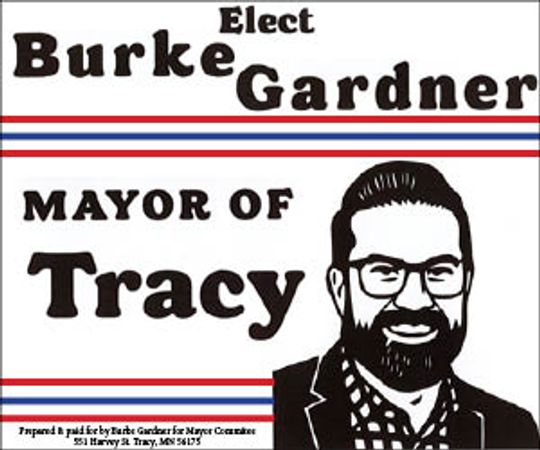
Five Tracy residents — Gordon Crossley, Nikki Hinrichs, Russel Boice and incumbentd Jan Arvizu and Jeri Schons — are all vying for what will be vacant spots on the council. What’s more, there will be a new mayor in the middle come 2027.
Four of the five candidates took part in last Wednesday’s Candidates’ Forum, sponsored by the Tracy Area Headlight Herald and moderated by Marshall Radio personality Heath Radke. Incumbent Jan Arvizu did not attend, as she is spending time with her cancer-stricken daughter in Cleveland, OH.
The following is a Q-and-A, recapping last week’s event:
• What is your preferred number of city council members and why?
Crossley: “I think the more input we have from more voices, from different parts of our community makes a stronger council. My preferred number would be probably six or seven.”
Hinrichs: “I would say six or seven; I don’t think if you get under a certain number, you lose input. I think the more you are able to have, financials respected, the more diversity you have.”
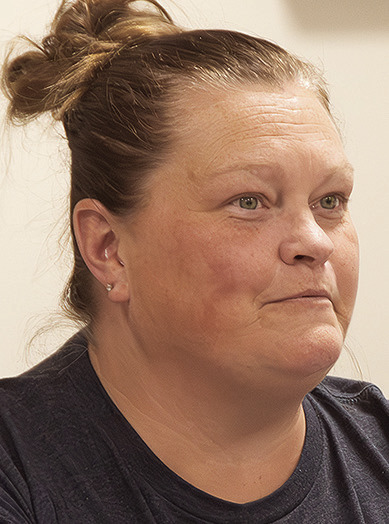
HINRICHS
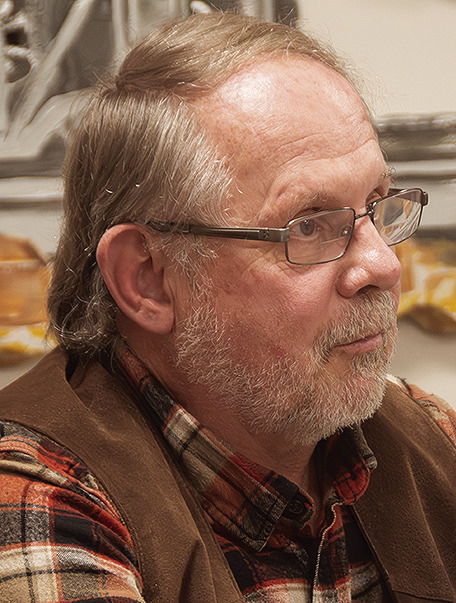
CROSSLEY
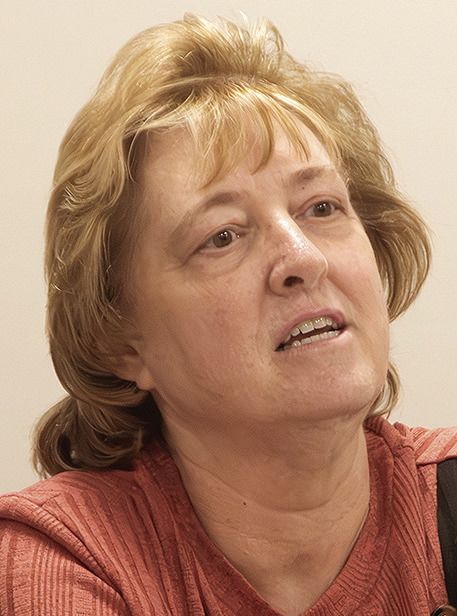
SCHONS
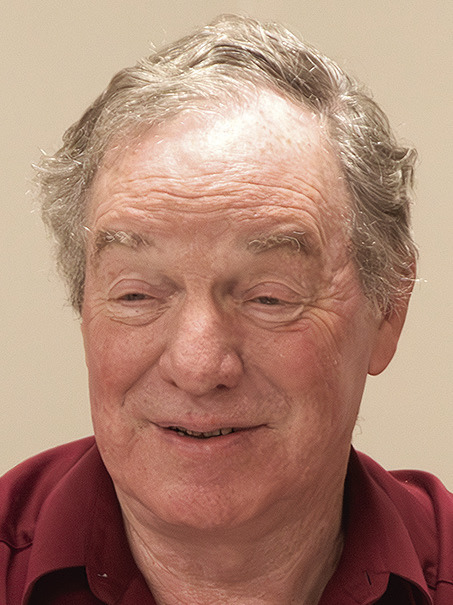
BOICE
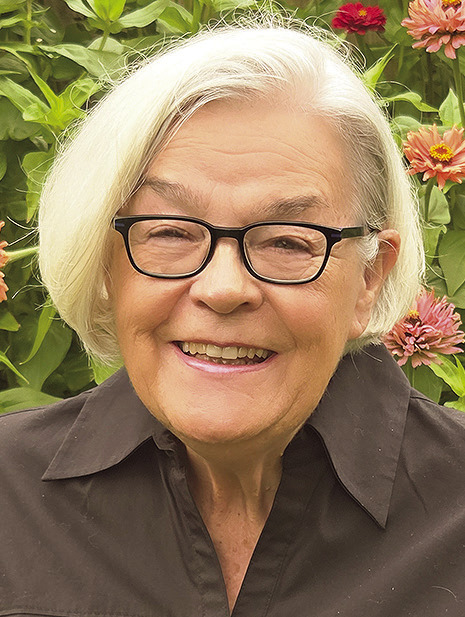
COUNCIL INCUMBENT JAN ARVIZU was unable to attend last week’s Candidates’ Forum as she was out of the state for family reasons.
Schons: “I’m fine that we went to six; my concern is as our population decreases, the amount of candidates we get to run decreases. The atmosphere today, a lot of business owners don’t want to run for public office — in a small town, it can affect their business.”
Boice: “I think we’re lucky to have six people who want to do it. As long as we’re able to get six candidates willing to be on the council, that’s a good number.
• Tracy’s historic municipal building is one of the busiest buildings in town year-round and one of our most important. But it needs improvement. What are some improvements you would push to see happen over the next 5 years?
Schons: “It needs to start with the bones of the building; we need to make sure we have a solid roof, get some tuckpointing done. We can start doing all the improvements we want inside, but if we do not improve the structure itself … we’re just going to be throwing our money into the wind. We also need to work closely with the school.”
Boice: “If there are improvements that need to be done, I would get professional advice, then make recommendations and ask for public input on what the best thing to do is.”
Crossley: “To be honest, I only utilize it with some of the people that I work with, although I have heard complaints about the lockeroom areas. I would certainly be willing to sit in on a committee with contractors and discuss it.”
Hinrichs: “From what I’ve witnessed being inside the VMC, I think it’s in pretty good condition compared to a lot of other buildings.”
• There are needed entities on Highway 14, but how do you suggest we attract them in the near future?
Boice: “I’d like to see better illumination. There could be more signing that brings attention to the city as people are passing through. To get improvements along that corridor we need to encourage advertising.”
Crossley: “I would say again that we should offer new businesses a tax incentive to come here. Between New Ulm and Brookings (SD), I don’t think there’s a truck stop. I think we’re in a prime location for a truck stop, a hotel.”
Hinrichs: “I think we need to promote our town more and promote the atmosphere of our town. We need to do some landscaping along the highway to make it a little more welcoming to make people want to be here and want to open businesses here.”
Schons: “We have been trying; part of the challenge is we need to get the community to support the businesses that we do have here locally, so when we talk about bringing in a second gas station, the one that we have doesn’t feel so threatened about another one coming to town.”
• Are there things the City can do to improve its industrial park and if so what are they?
Crossley: “I think advertising to bring in businesses that would serve in that park, because it’s a beautiful location. There’s a lot of great potential for larger industrial faculties, which would mean more jobs for this community.”
Hinrichs: “I keep going back to advertisements. It really comes back to promoting the area — what the possibilities of the area could potentially be for business owners not just in Tracy but outside of Tracy as well.”
Schons: “We have looked at some things that have been put on the back burner for now because of other priorities. We have someone that’s very good with grant writing and we have an agreement with Bollig to help us look at some of this, and I think we need to use some of those resources to look at how do we improve that area.”
Boice: “We could put together package deals and find out if a company does want to come here. Other than just talking about advertising, we need to know how to do that — maybe with trade magazines. It might even be worth investing in consultants.”
• Declining population has resulted in quiet downtowns compared to 30-40 years ago. What can Tracy do to increase traffic in downtown Tracy?
Hinrichs: “Advertising and promoting the business we do have in town. I think people coming through our town — Highway 14 is very busy — they don’t realize what we have downtown for opportunities to stop and shop.”
Schons: “If I had a good answer for that, I would be a millionaire. That being said, it is not just Tracy that has this issue. We’ve been fortunate to have people in Tracy that see the value of small-town business. The rest of us need to stand behind them and support them and use their services.”
Boice: “One of my pet peeves of Tracy is the lack of good lighting. It makes the town look better. A lot of things could be done to improve the appearance, so when people do have the occasion to drive through town, it looks like a viable location.”
Crossley: “It’s a great question that not only should be asked here, but around town. We might get newer businesses in if we offer some kind of tax relief or reduction. A lot of advertising, and also making the downtown more attractive; some of those buildings need to be destroyed and others fixed up.”
• With the City’s levy consistently rising annually, do you agree with increasing utility fees 3% on an annual basis?
Hinrichs: “If that’s what’s necessary, yes. The City has looked at everything to try to avoid that, but it’s one of those things that unfortunately we don’t have a lot of control over.”
Schons: “I do, because by increasing the utility rates, that money is definitely earmarked for that account. If we can balance off having our other service paid for by the users of those specific things, it only benefits us, because we won’t have to increase the levy as much.”
Boice: “It’s a good way of collecting money for the City. It’s another pot of money that the City gets; it probably makes sense for this to be a source. As for the exact amount, that’s an engineering decision.”
Crossley: “I’m very conservative fiscally being somewhat retired and knowing a lot of my friends are very much on a fixed income, we’re very concerned … even three percent, and with inflation, it takes a chunk out of our pay. Do we need to continue to look at it for every year? I can’t say yes or no on that; I need more information.”
• Additional affordable housing has been on the City and EDA’s agenda for years; how do you think Tracy can add more housing to our landscape and where would you propose new housing is added?
Schons: “I would propose adding new housing where we have started a new area out on Front Street. We’ve already had those lots plotted. I think we have that area that would be a very good place to continue building.”
Boice: “You should have people who can predict, based on other communities, what works, instead of just deciding to make some houses and put them somewhere arbitrarily. It should be based on reliable predictions from how things have been done in other communities.”
Crossley: “I think the city council has done a pretty good job of recognizing a lot of places around here to build like Front Street, and it would be in that area that I would recommend we continue to look at continuing to build. There’s a lot of land that would be ideal places.”
Hinrichs: “I agree it needs to happen. I think it needs to be a mixture of both houses and apartments, because not everybody can afford to buy a house. I think we need to look at the current houses that are vacant and are eyesores, and look at getting rid of them and utilizing some of that property.”